Breaking News: Plant Cells Use Hidden Math to Survive Sunlight Extremes
June 14, 2025 — In a discovery that upends decades of botanical science, researchers have found that plant cells perform split-second mathematical calculations to adjust to rapid changes in sunlight intensity. The process, akin to a "hidden mathematical dance," allows plants to prevent cellular damage while maximizing energy capture.
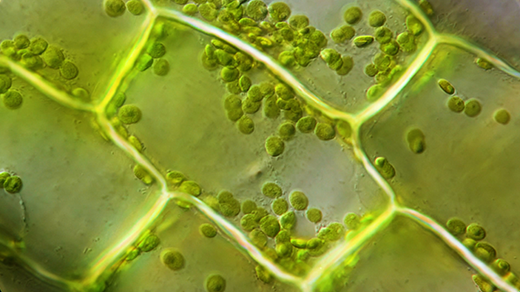
"Plants face a constant struggle between gathering enough light and avoiding its destructive power," said Dr. Elara Chen, lead botanist at the Institute of Plant Dynamics. "Our findings show they solve this equation in real time using a distributed algorithm inside their chloroplasts."
Background: The Lethal Gamble of Living on Light
Surviving on sunlight is inherently dangerous. The sun emits ultraviolet radiation that can snap DNA strands and degrade vital molecules. Moreover, light intensity varies dramatically — from soft morning rays to blazing midday sun, from dappled shade to full exposure.
"Think of a cloud obscuring the sun for a minute, then disappearing," explained Dr. Chen. "That sudden burst of full brightness can overwhelm a plant's cellular machinery if not handled instantly." Plants have evolved to thrive in such chaos, but the underlying mechanism remained unknown until now.
The Mathematical Discovery
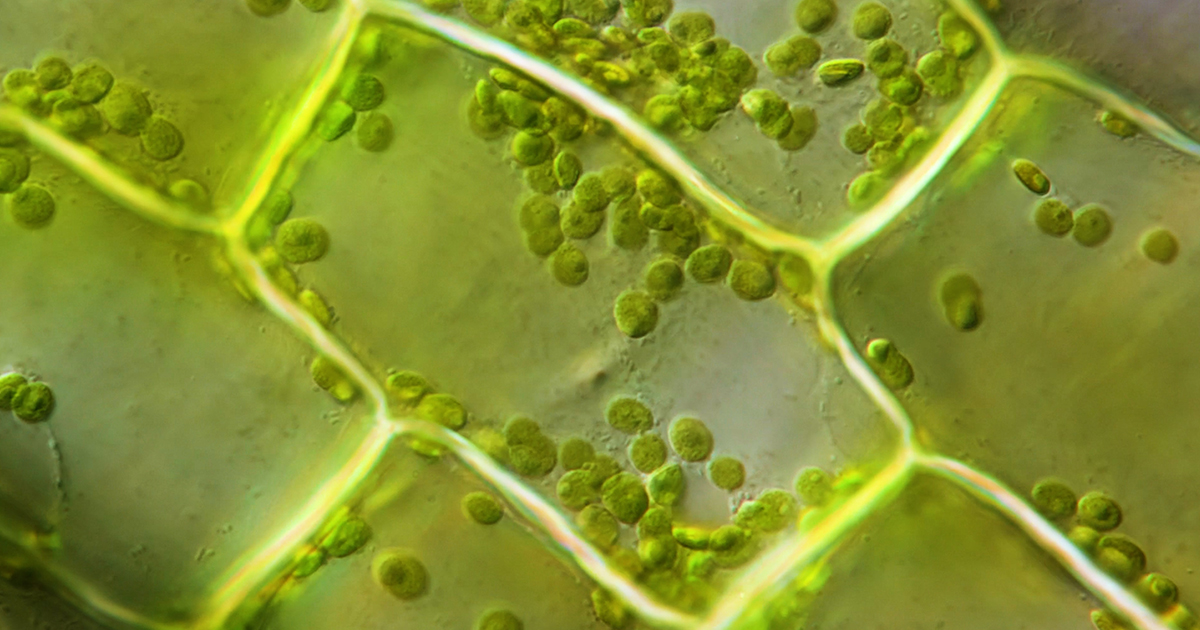
Using advanced imaging and computational models, the research team observed that chloroplasts — the organelles responsible for photosynthesis — coordinate their light-harvesting complexes through a feedback loop based on real-time photon flux. The process involves a power-law distribution that minimizes wasted energy and prevents photoinhibition.
"It's like a network of tiny computers running a sophisticated algorithm," said co-author Dr. Mark Rivera, a biophysicist at CalTech. "Each chloroplast adjusts its antenna system based on the local light intensity, but they also talk to each other to achieve global stability." The algorithm appears analogous to machine learning optimization techniques used in artificial intelligence.
Expert Quotes
"This is not a simple reflex," emphasized Dr. Chen. "It's a high-speed computation that happens in milliseconds. The plant is essentially solving a differential equation every time a cloud passes."
Dr. Rivera added, "Understanding this math could allow us to engineer crops that are far more resilient to fluctuating sunlight, which is critical in a changing climate."
What This Means
The implications are profound for agriculture and renewable energy. If scientists can replicate this algorithmic approach in bioengineered crops, plants could maintain high photosynthetic efficiency even during unpredictable weather. That could boost food security in regions prone to sudden cloud cover or intense heat waves.
Furthermore, the discovery opens a new field of biomathematical computing, where natural systems inspire novel algorithms. "We might design solar panels that mimic plant cells' ability to regulate energy capture," said Dr. Rivera. "It's an entirely new way of thinking about adaptive systems."
Next Steps for Research
The team plans to decode the exact molecular signals that enable this rapid coordination. They also aim to study whether similar algorithms exist in other photosynthetic organisms like algae and cyanobacteria. A preprint of the study is available on bioRxiv, with peer-reviewed publication expected later this year.
— Reporting contributed by Science Today