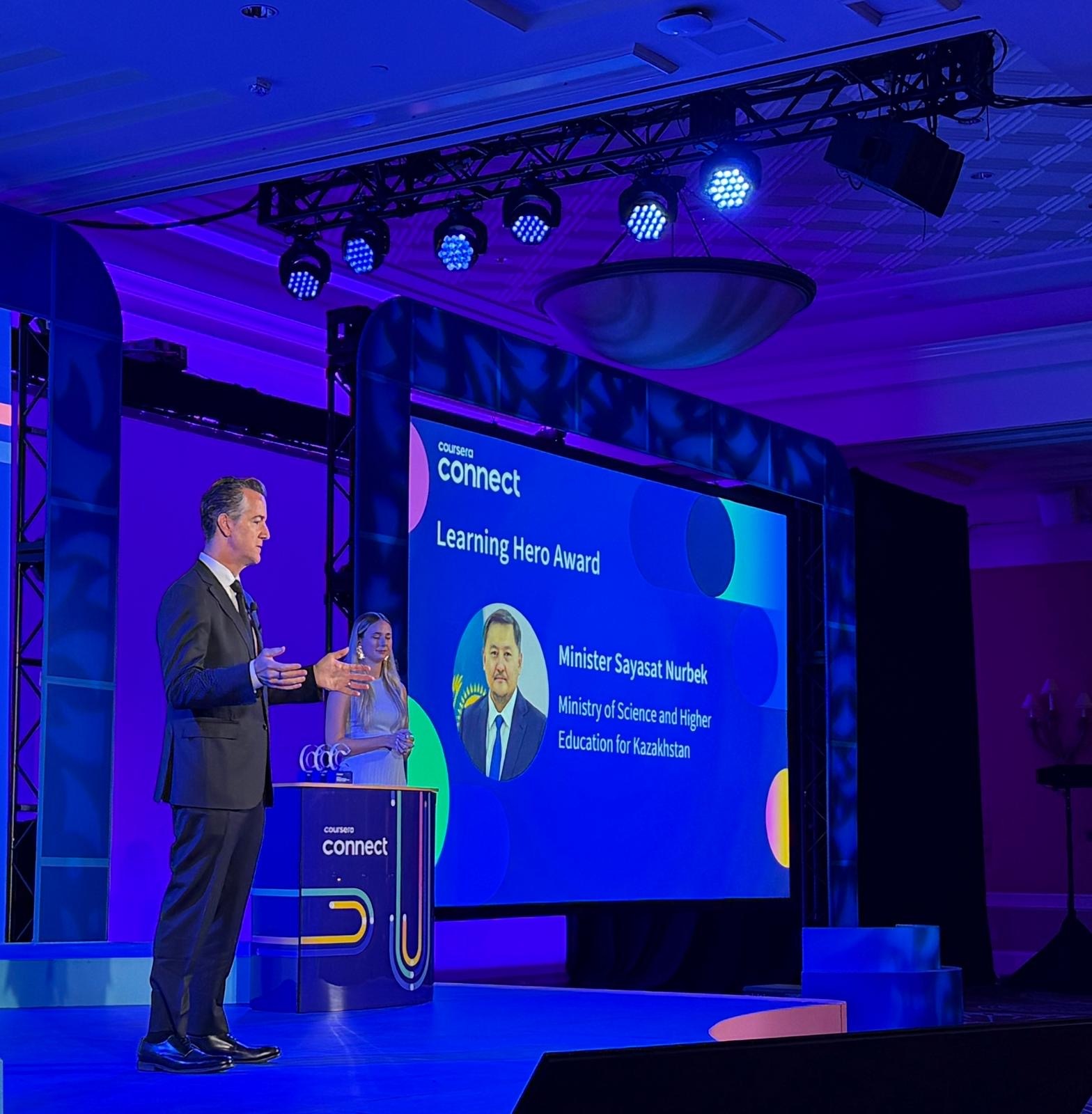
As digital transformation reshapes global labor markets, universities must evolve to connect curricula with careers. Kazakhstan's Ministry of Science and Higher Education has renewed its partnership with Coursera to further integrate world-class, for-credit learning into the national higher education system. This expansion provides students across the country with critical skills in AI, data science, cybersecurity, and business, while promoting the Kazakh language in online education. Below, we answer key questions about this initiative.
What does the renewed partnership between Kazakhstan and Coursera involve?
The Ministry of Science and Higher Education and Coursera have extended their collaboration, originally launched in 2022, to bring for-credit online learning to tens of thousands of Kazakh students. This partnership deepens the integration of Coursera's platform into university curricula, allowing students to earn official transferable ECTS credits toward their degrees by completing job-relevant certifications. Through Coursera for Campus, students gain access to over 13,500 courses from more than 375 leading companies and universities worldwide. This includes cutting-edge content in fields like data science, cybersecurity, AI, engineering, and finance, which are essential for thriving in the global digital economy. The renewed agreement also supports the Ministry's strategic goals of modernizing higher education and ensuring equitable access to top-tier learning resources.
How does the partnership support AI literacy among Kazakh students?
AI literacy is a foundational skill for all graduates, regardless of their field. Through this partnership, the Ministry's AI-Sana initiative ensures that every student gains a working understanding of Generative AI and Digital Ethics. Coursera offers over 1,100 GenAI courses, including introductory programs like Google AI Essentials and advanced content from innovative AI companies such as Anthropic's Building with the Claude API. By providing widespread access to these resources, the partnership equips students with practical AI knowledge that is directly applicable in the workplace. This focus on AI education prepares Kazakh graduates to contribute to the digital economy and stay competitive in a rapidly evolving job market.
What measures are in place to promote the Kazakh language in online education?
To overcome language barriers and make world-class education more accessible, the partnership has prioritized the translation of courses into Kazakh. Over 4,000 courses on priority topics—including AI, generative AI, data science, and machine learning—have been translated into the national language. This effort ensures that students and professionals can learn complex subjects in their native tongue, which enhances comprehension and engagement. The translation initiative is a key component of the AI-Sana program and reflects the Ministry's commitment to preserving and promoting the Kazakh language in the digital space. By making high-quality content available in Kazakh, the partnership broadens educational opportunities and supports inclusive growth in the country's higher education sector.
What results has the partnership achieved since 2022?
Since the initial collaboration began, the partnership has delivered significant outcomes for Kazakhstan's higher education system. To date, over 235,000 students from more than 100 Kazakhstani universities have participated in Coursera programs. Collectively, these students have earned over 500,000 certificates, demonstrating a high level of engagement and skill acquisition. These certificates provide industry-recognized credentials in high-demand fields such as data science, cybersecurity, AI, and finance. The program has effectively bridged the gap between academic curricula and real-world career requirements, equipping graduates with practical, job-ready skills. The renewed partnership builds on this momentum, aiming to reach even more learners and further modernize the country's higher education landscape.
How does Coursera for Campus help modernize Kazakhstan's higher education curricula?
Through Coursera for Campus, Kazakhstan's universities can integrate thousands of courses from the world's top institutions into their programs. Students can take these courses for credit, earning ECTS credits that transfer toward their degrees. This flexibility allows universities to update their offerings quickly to reflect labor market demands. The platform provides courses from over 375 leading companies and universities, covering everything from AI and cybersecurity to engineering and finance. By enabling for-credit learning and industry-recognized certifications, the partnership helps modernize curricula without requiring institutions to develop new content from scratch. It also ensures that students graduate with skills that are directly relevant to employers, making the education system more responsive to the needs of the digital economy.
What types of certifications can students earn through this initiative?
Students enrolled in the partnership can earn a wide range of industry-recognized certifications that validate their skills. These include certificates in Data Science, Cybersecurity, Artificial Intelligence, Engineering, and Finance, among other fields. Many of these certifications are offered by top companies like Google, IBM, and Meta, as well as leading universities such as Stanford and Yale. Upon completion, students receive verifiable credentials that they can share with employers and add to their LinkedIn profiles. These certifications are designed to be job-relevant and often include practical projects that demonstrate real-world competence. By earning these credentials, Kazakh students can enhance their employability and prepare for careers in the global digital economy.
How does this partnership help bridge the gap between curriculum and careers?
The partnership directly addresses the disconnect between traditional university curricula and the skills demanded by modern employers. By integrating job-relevant courses into degree programs, students learn practical competencies in areas like AI, data analysis, and digital ethics. The availability of industry-recognized certifications provides concrete proof of these skills, making graduates more attractive to employers. Additionally, the focus on for-credit learning ensures that students can apply their coursework towards their degrees without sacrificing academic progress. The collaboration also incorporates feedback from leading companies to keep content up-to-date with market trends. As a result, the partnership creates a direct pipeline from education to employment, helping Kazakhstan's workforce adapt to the fast-changing digital economy.