Introduction
After a year of intense political maneuvering, nations at the International Maritime Organization (IMO) have managed to put a long-awaited framework for curbing global shipping emissions back on the negotiating table. The so-called “net-zero framework” was initially expected to be approved by the end of 2025, but a concerted push-back from the United States and other fossil-fuel producing nations led to a delay. Now, following a key meeting in London in early 2026, the framework has survived—though its adoption has been pushed to December 2026. This article explains the contentious issues, the main players, and what the latest IMO meeting achieved.
Background: The Net-Zero Framework and Its Delay
The IMO’s net-zero framework is a set of binding measures designed to help the global shipping industry—which accounts for more than 2% of global greenhouse gas emissions and is not covered by the Paris Agreement—reach net-zero emissions by mid-century. In April 2025, at the Marine Environment Protection Committee (MEPC) session in London, nations had broadly agreed on the framework, even as the United States withdrew its participation midway through the talks. However, an extraordinary session in October 2025, called specifically to formally adopt the framework, descended into chaos. US negotiators were accused of “bully-boy tactics” as they led a campaign to reject the proposed text, effectively blocking adoption.
Why Some Countries Oppose the Framework
Opposition to the net-zero framework centers on its proposed carbon-pricing mechanism. Critics—including the Trump administration, several fossil-fuel producing nations, and some industry groups—argue that carbon pricing would impose heavy costs on shipping and ultimately on global trade. They have called for the framework to be stripped of this mechanism or abandoned entirely. At the MEPC84 meeting in early 2026, opponents claimed they were simply seeking consensus, but supporters saw their efforts as an attempt to gut the core of the deal. Liberia and Panama, which serve as flag states for roughly a third of the world’s commercial shipping, joined with Argentina to propose an alternative framework that effectively removed carbon pricing entirely.
Alternative Proposals and Key Players
The counter-proposal led by Liberia, Panama, and Argentina sought to replace the original framework’s carbon-pricing mechanism with a simpler levy or a weaker set of measures. This alternative found support among some developing nations concerned about the economic impact, as well as from fossil-fuel producers. However, it faced stiff resistance from a coalition that included the European Union, Brazil, and Pacific island nations, who argued that the original framework already represented a “careful balance of interests”. These supporters stressed that carbon pricing is essential to drive the shift to cleaner fuels and technologies, and to level the playing field between early movers and laggards.
Supporters’ Viewpoint: Why Carbon Pricing Is Non-Negotiable
For supporters, the net-zero framework without carbon pricing would be toothless. They point out that shipping is one of the hardest sectors to decarbonize due to long vessel lifetimes and the high cost of alternative fuels such as green hydrogen, ammonia, and methanol. A robust carbon price, they argue, would create a market signal that spurs investment in clean technologies and fuel production. Pacific island nations, particularly vulnerable to sea-level rise, have been vocal in demanding ambitious action. Brazil—a major exporter of agricultural and mineral commodities—sees the framework as a way to protect its trade routes from future carbon border adjustments. The EU, already implementing its own Emissions Trading System for shipping, views the IMO framework as a necessary global complement.
The Latest IMO Meeting Outcome (MEPC84)
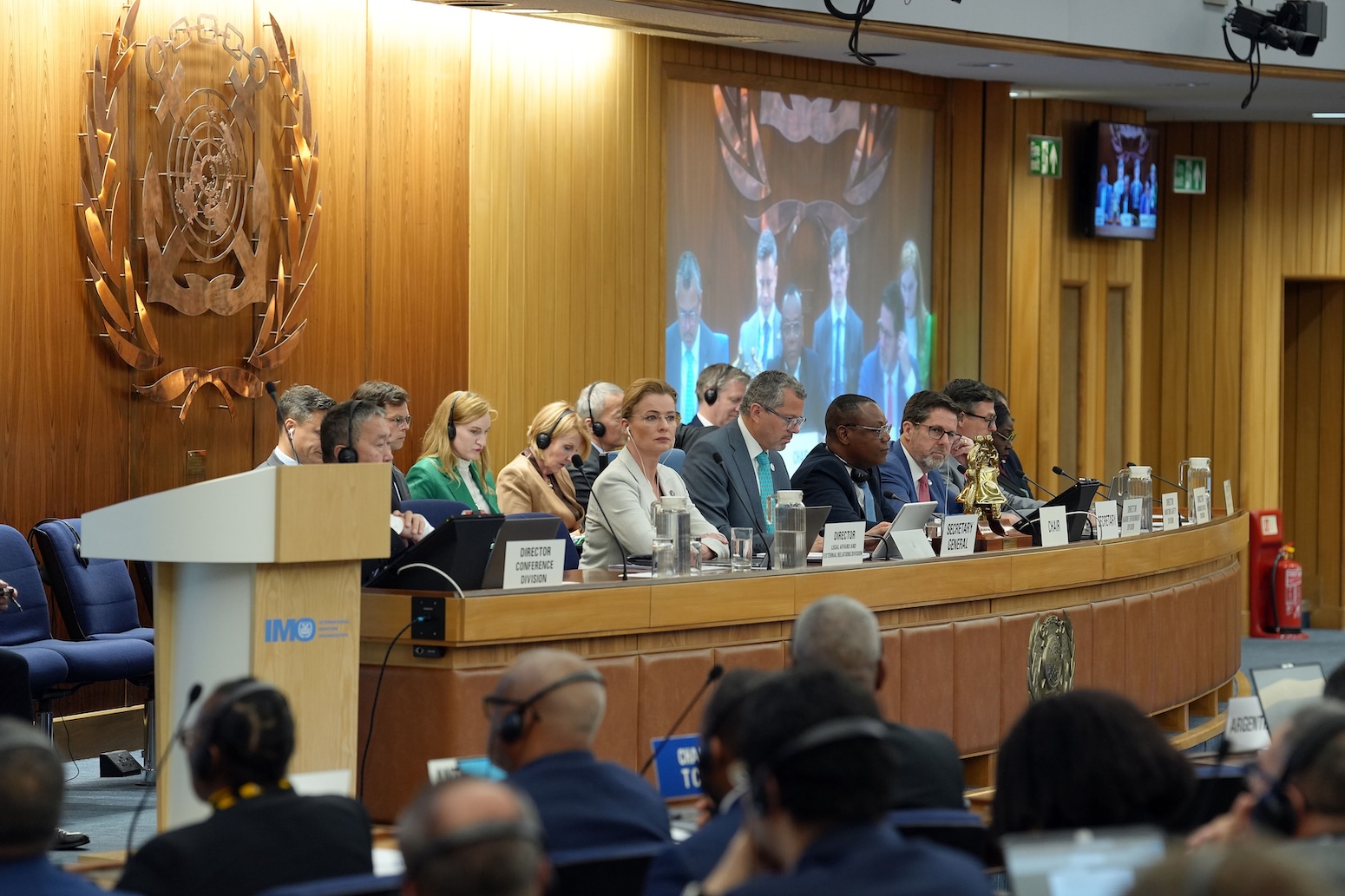
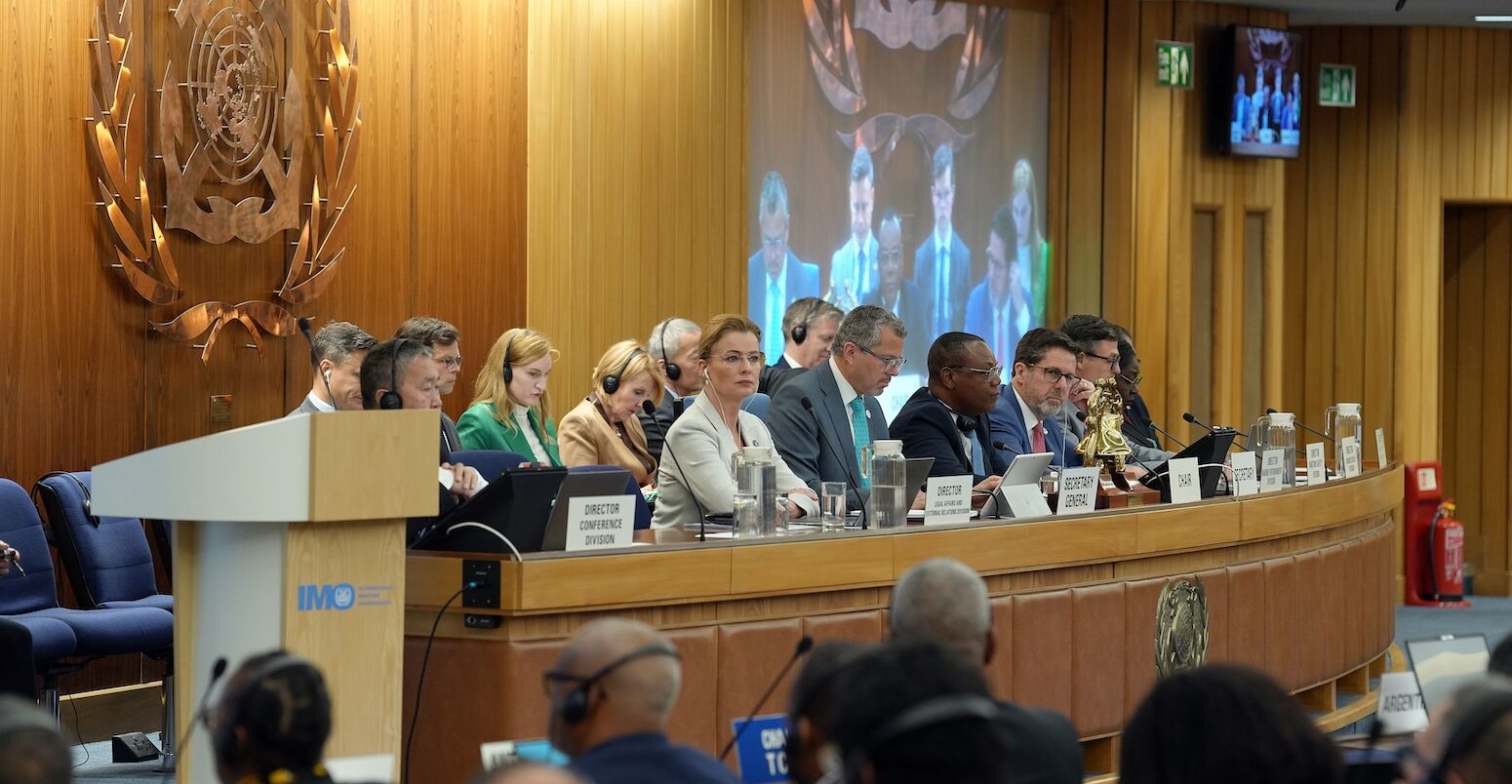
At the MEPC84 meeting in London in early 2026, delegations from IMO member states engaged in intense negotiations. The alternative proposal from Liberia, Panama, and Argentina gained traction but ultimately failed to gain the required majority. In a last-minute compromise, the meeting ended with a reconfirmation of commitment to rebuilding consensus on global shipping emissions. Crucially, the original framework was not abandoned—it survived the session. The committee now plans to hold an extraordinary session in December 2026 to try to adopt the framework, with carbon pricing still on the table. While no concrete decisions were made, the outcome was seen as a victory for those who want to keep the net-zero target alive.
What Happens Next?
The next critical milestone is the December 2026 IMO meeting, where member states will once again attempt to formalize the net-zero framework. In the meantime, working groups are expected to refine the carbon-pricing mechanism and address concerns raised by opponents. The political landscape may shift depending on the outcome of the 2026 US presidential election, but for now, the framework remains intact. The global shipping industry—and the climate—will be watching closely. As one Pacific island delegate put it: “We cannot afford another delay. The planet’s future depends on what happens in these rooms.”