Overview
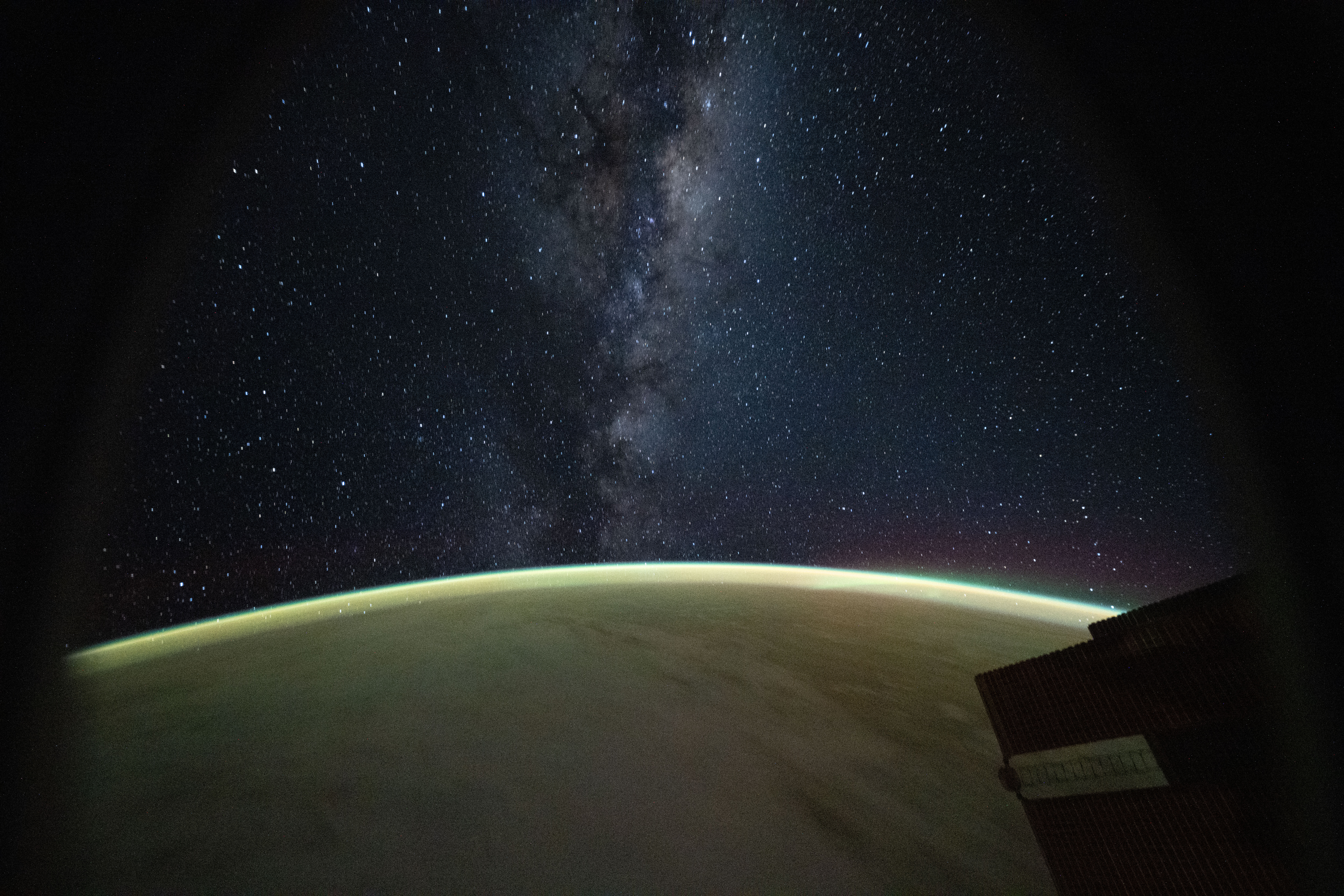
On April 13, 2026, NASA astronaut Chris Williams witnessed a spectacular sight from the SpaceX Dragon spacecraft docked to the International Space Station (ISS). He captured the Milky Way rising above Earth’s atmospheric glow—a phenomenon known as airglow. This tutorial explains the science behind airglow and provides a step-by-step guide for photographing it from orbit. Whether you’re an astronaut preparing for a mission or a terrestrial photographer curious about space imagery, this guide covers the essentials: understanding the physics, choosing the right equipment, setting exposure parameters, and avoiding common pitfalls.
Prerequisites
Before you attempt to photograph airglow from the ISS, ensure you have the following:
- Camera equipment: A DSLR or mirrorless camera with manual controls, a fast wide-angle lens (f/1.4–f/2.8), and a sturdy mount or bracket for zero-gravity use.
- ISS access: This guide assumes you are aboard the ISS or a visiting spacecraft. Knowledge of orbital mechanics and crew schedules is helpful.
- Understanding of exposure: Familiarity with ISO, aperture, shutter speed, and long-exposure noise reduction is essential.
- Post-processing software: Tools like Adobe Lightroom or Photoshop for combining multiple exposures and enhancing contrast.
Step-by-Step Instructions
1. Understanding Airglow and the Milky Way
Airglow results from two processes in the upper atmosphere (80–300 km altitude). First, atoms and molecules—such as oxygen and hydroxyl—absorb sunlight during the day and later emit photons to release that energy. Second, ionized atoms capture free electrons, also emitting photons. This is different from auroras, which are driven by high-energy particles from the solar wind interacting with Earth’s magnetosphere. Airglow, by contrast, is powered by ordinary solar radiation and occurs globally, not just near the poles. The Milky Way, our galaxy’s bright band of stars and interstellar matter, is best seen from orbit because the atmosphere is thinner and light pollution minimal. Chris Williams’ image combined these two elements: the galaxy rising above the faint, glowing limb of Earth.
2. Timing and Orbital Position
From the ISS, the best time to capture airglow is during the “night” part of the orbit (about 45 minutes of darkness per 90-minute orbit). Plan for a period when the Moon is not visible or is below the horizon, as moonlight can overwhelm the faint airglow. Use the ISS’s orientation and the position of the Sun to find a clear view of the limb—the edge of Earth’s disk where airglow is most pronounced. The Milky Way’s arch is visible year-round, but its peak visibility depends on the month and your orbital path. In April, as in Williams’ image, the galactic core rises in the early morning darkness. Coordinate with the ISS flight plan to secure a window that faces away from the Sun and toward the right part of the sky.
3. Camera Setup and Settings
Secure your camera to a stable mount inside the ISS (often a “window” viewport) or attach it to a robotic arm like the Canadarm2. Use a cable release or a timer to avoid shake. Recommended settings (based on ISS astrophotography standards):
- Lens: 14-24mm at f/2.8 or wider.
- ISO: 1600–3200 to capture faint stars without excessive noise.
- Shutter speed: 2–6 seconds maximum to avoid star trails (the ISS moves at ~7.66 km/s, so longer exposures blur stars).
- Focus: Manually set to infinity (use the camera’s live view on a bright star).
- File format: RAW for maximum post-processing flexibility.
4. Capturing the Image
Take a test shot at the initial settings. Adjust if necessary: if airglow is too faint, increase ISO or reduce shutter speed (but accept some trailing). Shoot a sequence of 20–30 frames in rapid succession to later stack them for noise reduction. Keep the camera pointed at the same region of sky (use the ISS’s attitude control to hold steady if possible). For Milky Way + airglow, frame the limb of Earth at the bottom of the image, with the galactic arch angling upward. In Williams’ case, the view from the SpaceX Dragon’s cupola allowed a clear, unglazed window. Monitor the histogram to preserve highlights in the airglow band.
5. Post-Processing
Transfer the RAW files to a computer. Use software like DeepSkyStacker or Sequator for stacking multiple frames to reduce noise and enhance detail. Then, import into Adobe Lightroom:
- Adjust white balance to make the airglow appear green (most common) or reddish-purple, as seen in many ISS images.
- Increase clarity and dehaze to bring out the Milky Way’s dust lanes.
- Apply graduated filters to darken the sky above the limb if needed.
- Export as a high-resolution JPEG for sharing.
Common Mistakes
Overexposing the Earth’s Limb
Airglow can be surprisingly bright; if you set the shutter speed too long, the Earth’s limb becomes a solid green wall. Keep the exposure short enough that the atmosphere remains translucent.
Forgetting to Focus
Autofocus often fails on stars. Always lock focus to manual infinity, and verify with live view. A missed focus turns the Milky Way into a fuzzy blur.
Ignoring the ISS’s Motion
Even a 5-second exposure will show star trailing at the ISS’s speed. Use a tracker if you have one, or accept slight trails as a stylistic element—but for a sharp Milky Way, keep shutter speeds under 3 seconds.
Not Shooting in RAW
JPEG loses color and dynamic range needed to separate airglow from the background. Always shoot RAW for maximum control.
Summary
Capturing the Milky Way above Earth’s airglow from the ISS is both a scientific and artistic achievement. By understanding the physics of airglow (excited atoms releasing photons), timing your shot during orbital night, and using the right camera settings (fast lens, high ISO, short exposure), you can reproduce the stunning image that Chris Williams made in 2026. Remember to avoid common pitfalls like overexposure and misfocus, and post-process your RAW files carefully. With practice, you’ll be able to share the glowing views that only astronauts—and their cameras—can witness.