Introduction
Recent developments in climate policy have created a complex landscape. The European Commission is considering exemptions to its methane emissions regulation for fossil-fuel companies, while Norway expands gas fields. At the same time, investors are pouring billions into renewable energy funds. This guide helps you navigate these conflicting signals, understand the key facts, and form your own informed perspective. We'll walk through the critical elements step by step.

What You Need
- Access to reliable news sources (Politico, The Guardian, Financial Times, Carbon Brief).
- Basic understanding of climate policy and energy markets.
- A notebook or digital document to record your observations.
- Patience to cross-check information from multiple outlets.
Step-by-Step Guide
Step 1: Grasp the EU’s Proposed Methane Exemptions
Start by reading the latest from Politico (May 2026). The European Commission is considering changes to its flagship methane emissions regulation. Draft government guidelines would allow national authorities to grant exemptions to fossil-fuel companies on energy security grounds. This follows pressure from the Trump administration. Understand that this is a major win for the oil and gas sector, potentially weakening climate action. Write down the key argument: exemptions are justified by energy security, but critics say they undermine the EU’s climate commitments.
Step 2: Compare with Norway’s Gas Field Reopening
Next, turn to The Guardian report. Norway has approved reopening three North Sea gasfields that were closed nearly 30 years ago. The government justifies this by saying it helps “fill the gap in energy supplies created by the Middle East war.” Additionally, Oslo has approved exploration at 70 new locations in the North Sea, Barents Sea, and Norwegian Sea. Note how this contrasts with the EU’s exemptions—both prioritize short-term energy security over long-term emissions reductions. These decisions show the tension between fossil fuel dependence and climate goals.
Step 3: Analyze the Surge in Renewable Energy Investments
Now read the Financial Times story. Investors are “piling into clean-power funds at the fastest pace in five years.” The Iran war has accelerated the global push for energy security and alternatives to oil and gas. More than £3 billion was invested in global renewable energy funds in April 2026 alone, bringing total net asset value to $43 billion. This step shows that while governments make exceptions for fossil fuels, the private sector is betting on renewables. Record this contradiction—it’s central to understanding the current moment.
Step 4: Assess Global Shipping and Climate Negotiations
Check Carbon Brief’s Q&A on the International Maritime Organization meeting in London. Nations are “back on track” to adopt a framework for curbing global shipping emissions. This is a positive step, but it’s happening alongside the fossil-fuel exemptions. Consider how shipping emissions are often overlooked, yet the sector is responsible for a significant share of global CO2. This step underscores the piecemeal nature of climate action.
Step 5: Monitor Weather and Climate Extremes
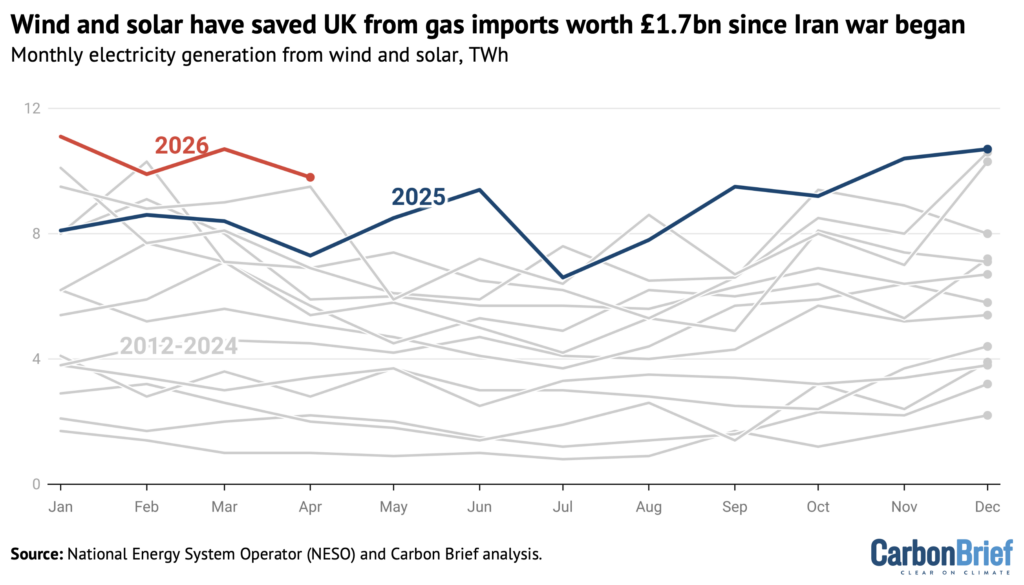
Review the Financial Times report on global sea temperatures reaching the second-highest on record in April 2026, stoking fears of a brewing “super El Niño” that could intensify extreme weather. Also note the Al Jazeera report on at least 18 deaths from floods and landslides in Kenya due to heavy rain. And consider the IRENA study (covered by BusinessGreen) showing that solar and wind paired with battery storage already deliver reliable, round-the-clock electricity at lower cost than fossil fuels in many regions. These facts show the urgency of climate action, even as policymakers grant fossil-fuel leeway.
Step 6: Synthesize and Draw Conclusions
Bring all the pieces together. The EU exemptions and Norway’s gas expansion represent a step backward for climate policy, justified by energy security. Yet renewable investments are surging, and clean technologies are proving cheaper. Meanwhile, climate impacts (floods, El Niño) are worsening. The net effect is a fragile, inconsistent transition. Your conclusion should reflect the tension: we are not moving fast enough, but the tools for change are available. Share your synthesis with others or use it to advocate for stronger policies.
Tips for Deeper Understanding
- Cross-check sources: Always read multiple outlets to get the full picture, as political biases can shape coverage.
- Focus on long-term trends: Short-term exemptions may dominate headlines, but the investment shift toward renewables is a powerful counterforce.
- Understand the “energy security” argument: It is often used to justify fossil fuel expansion, but can also support renewable deployment (domestic solar, wind, storage).
- Watch for tipping points: The Amazon tipping point mentioned in the original title is a reminder that ecosystems can collapse abruptly—the same may apply to climate policy if too many exemptions are granted.
- Engage with data: The 0.15°C cooling effect of trees in cities (from Nature Communications) shows that nature-based solutions are effective and should be part of any climate strategy.