JetStream 3.0 Released by Apple, Google, and Mozilla
In a joint announcement today, Apple's WebKit team, alongside Google and Mozilla, officially launched JetStream 3.0—a major overhaul of the widely used cross-browser performance benchmark suite. The update directly addresses a critical flaw in its predecessor, JetStream 2, where WebAssembly startup times became so fast that the scoring system produced infinite scores.
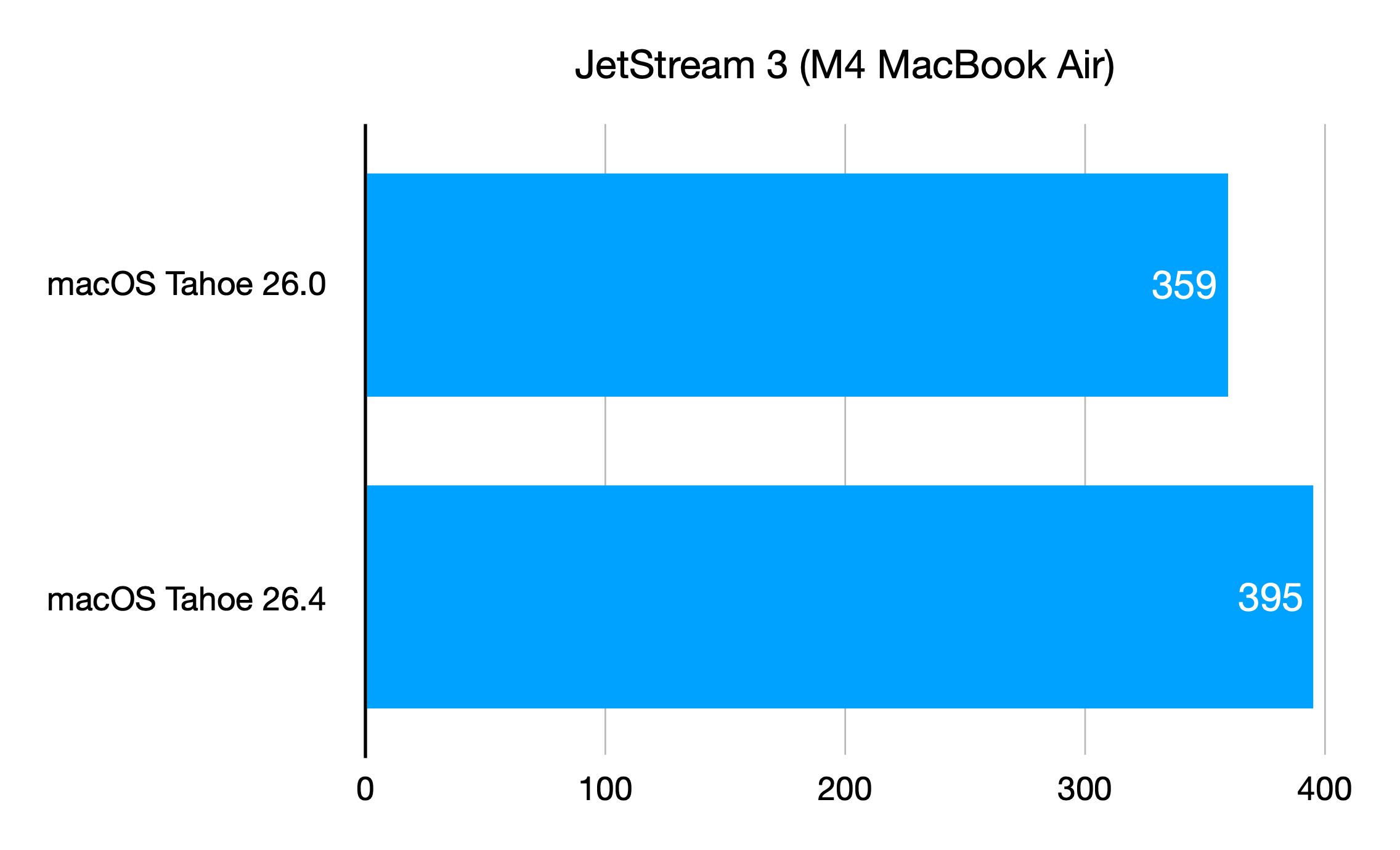
"We reached a point where optimization gains were being masked by a measurement ceiling," said a WebKit engineer involved in the project. "JetStream 3 fundamentally rethinks how we assess modern web workloads, especially in WebAssembly."
Background: The Infinity Problem
JetStream 2 measured WebAssembly (Wasm) in two phases—Startup and Runtime—anticipating large C/C++ applications willing to tolerate long initial loads. Over time, browser engines like JavaScriptCore optimized startup so aggressively that instantiation times for small modules dropped below 1 millisecond.
Because the scoring formula used Score = 5000 / Time with Date.now() rounding, a time of 0 ms yielded an infinite score. The JetStream team was forced to patch version 2.2 with a score clamp of 5000 to prevent the benchmark from being invalidated.
"An infinite score sounds great, but it meant the benchmark was no longer measuring real-world performance," the engineer explained. "WebAssembly is now in the critical path for libraries, image decoders, and UI frameworks—microbenchmarks had to evolve."
What’s New in JetStream 3.0
JetStream 3 introduces a unified scoring model that eliminates separate Startup and Runtime phases for Wasm. Instead, it integrates WebAssembly tasks directly into larger application-level simulations, better reflecting how Wasm is used on today’s web—from initial page load to interactive rendering.
- Unified Workloads: Wasm modules are embedded in realistic page scenarios, not isolated micro-tasks.
- Higher Precision Timing: Uses
performance.now()with sub‑millisecond resolution to capture even tiny optimization wins. - Scaled Tests: Includes larger codebases (e.g., game engines, compression libraries) to stress both startup and runtime throughput.
According to the team, the new approach already shows measurable differences. "Where JetStream 2 gave WebKit an infinite score on one subtest, JetStream 3 shows a clear 15% improvement over the baseline—meaningful for real users," the engineer said.
What This Means for Web Performance
JetStream 3 raises the bar for browser engine optimization. Developers can expect more relevant benchmarks that predict how pages will perform with Wasm-heavy libraries. For end users, it means faster loading interactive sites, particularly those using image decoding, real-time collaboration, or WebAssembly-based frameworks.
The update also signals a shift in how the industry collaborates on performance measurement. "This isn’t just a refresh; it’s a fundamental shift in measurement philosophy," added a Mozilla contributor. "We’re aligning benchmarks with what developers actually ship."
For browser engineers, the challenge is now to optimize across larger, more integrated workloads rather than targeting synthetic sprint times. Google’s V8 team noted that the new suite “forces engines to focus on real-world pipeline performance, not just peak throughput.”
Background: The Evolution of Browser Benchmarks
JetStream debuted in 2014 as a collaboration between Apple, Google, and Mozilla. It quickly became the standard for testing JavaScript and WebAssembly performance across Safari, Chrome, and Firefox. JetStream 2 (2018) introduced separate Wasm scoring, but the rapid pace of optimization soon exposed its limitations.
The new suite includes contributions from dozens of web performance experts and is open-source. It replaces JetStream 2 entirely and will be updated annually to reflect emerging patterns in web application development.
JetStream 3 is available today at [jetstream.org](https://jetstream.org).