WhatschatDocsProgramming
Related
Breaking: Copilot Applied Science Researcher Automates Intellectual Toil with New 'Eval-Agents' ToolPython Metaclasses: The Secret Engine Behind Every Class You Write8 Key Insights into Stack Allocation for Go PerformanceMastering VS Code Snippets: Create Custom Shortcuts for Faster Coding10 Steps to Overcome Your AI PR Review Bottleneck: A Tech Lead's PlaybookRethinking Neanderthal Intelligence: Brain Size May Not Tell the Whole Story10 Crucial Updates About Python 3.15.0 Alpha 5Navigating AI Governance in Enterprise Vibe Coding: A Comprehensive Guide

10 Things You Need to Know About Turbovec: The Rust Vector Index Powered by Google’s TurboQuant

Last updated: 2026-05-21 05:32:34 · Programming
10 Things You Need to Know About Turbovec: The Rust Vector Index Powered by Google’s TurboQuant
Source: www.marktechpost.com

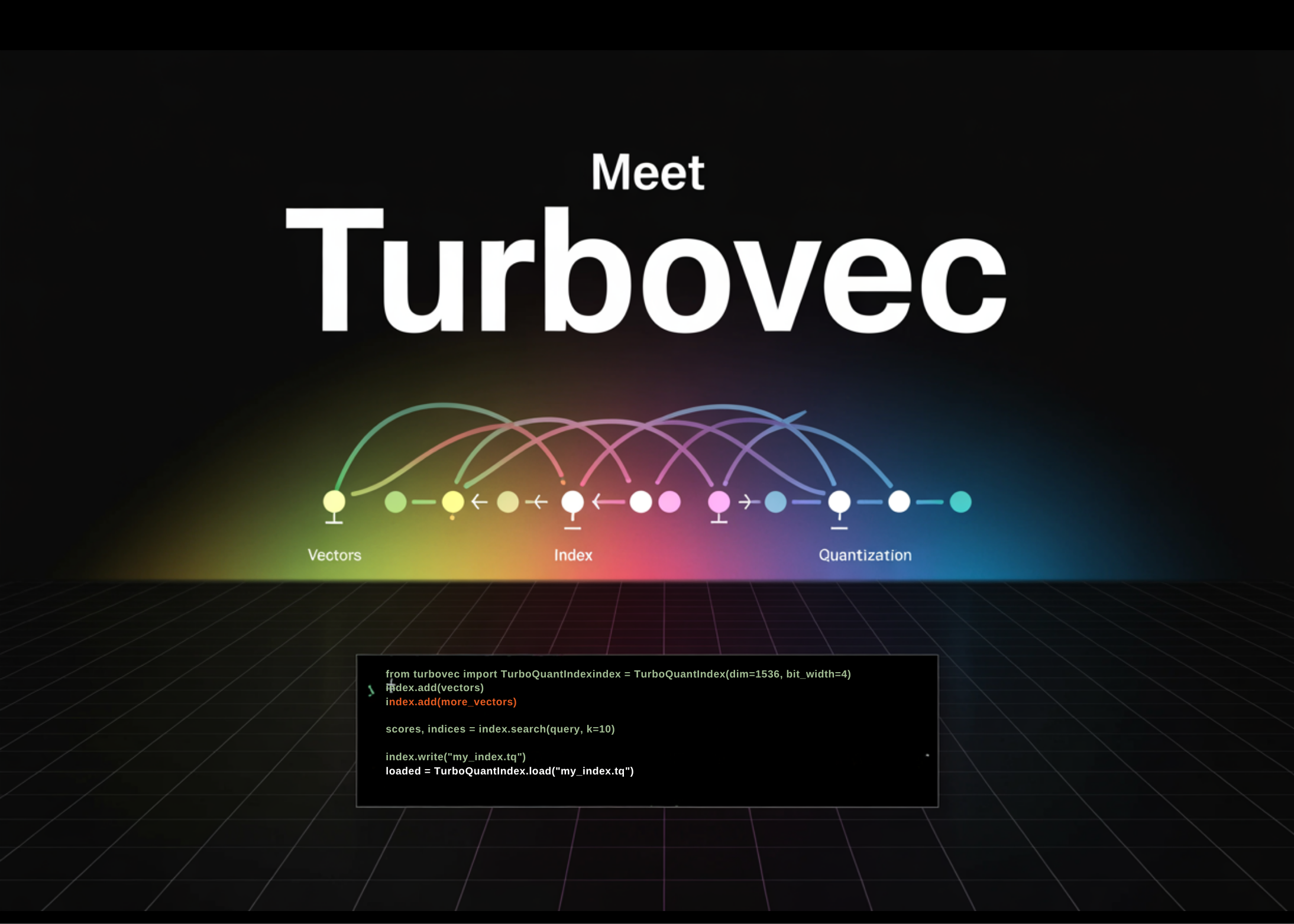
Retrieval-augmented generation (RAG) pipelines have become the backbone of modern AI applications, but scaling them comes at a cost. Storing 10 million float32 embeddings consumes 31 GB of RAM—a serious constraint for teams running local or on-premise inference. Enter Turbovec, an open-source vector index written in Rust with Python bindings that leverages Google Research’s TurboQuant algorithm. It slashes memory usage by 8x (to just 4 GB for the same corpus) and delivers search speeds that outpace FAISS IndexPQFastScan by 12–20% on ARM hardware. Below, we break down the ten essential details you need to know about this library, from its unique quantization approach to real-world performance numbers.

10 Things You Need to Know About Turbovec: The Rust Vector Index Powered by Google’s TurboQuant
Source: www.marktechpost.com