Introduction
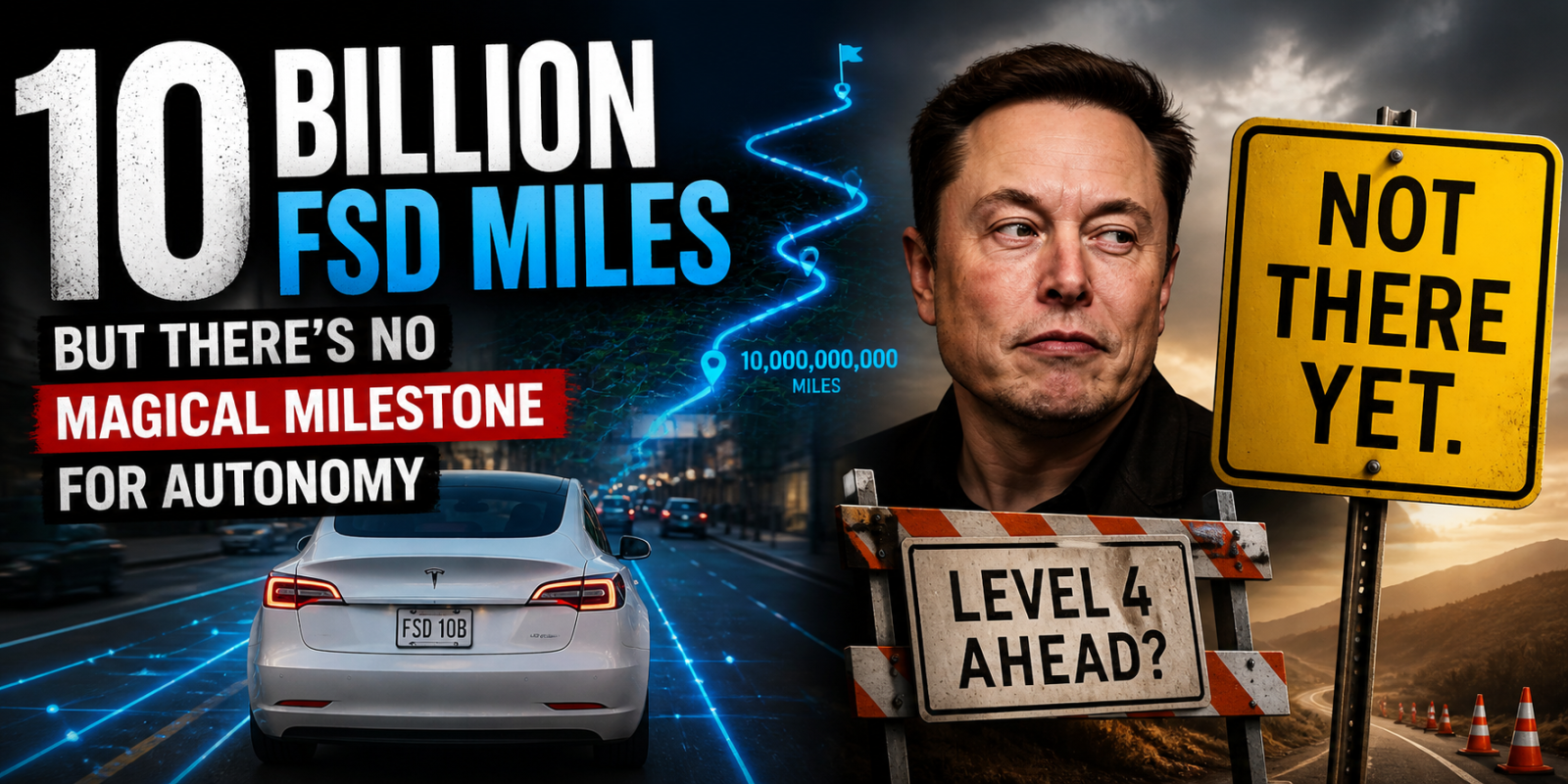
Elon Musk has long claimed that a critical mass of real-world driving data is the key to unlocking safe, unsupervised full self-driving (FSD). Tesla's fleet has now surpassed 10 billion miles driven with Full Self-Driving (Supervised) — a milestone Musk himself set as the threshold needed for safe unsupervised operation. But this round number isn't a magic switch; it's just one piece of a larger, ongoing process. In this guide, we walk through the step-by-step approach Tesla uses to turn raw miles into reliable autonomy, from initial data collection to the final push for Level 4 capability.
What You Need
Before diving into the steps, here are the core prerequisites that enabled Tesla to reach this milestone:
- A large fleet of Tesla vehicles equipped with Full Self-Driving (Supervised) hardware and software.
- Continuous data logging from cameras, radar (on older models), ultrasonic sensors, and vehicle telemetry.
- Over-the-air software updates to roll out improvements and collect new data patterns.
- High-performance computing infrastructure (like Dojo) to process and train neural networks on the gathered data.
- Regulatory approvals in jurisdictions where FSD is enabled for public roads.
Step-by-Step Guide
Step 1: Accumulate a Baseline of Real Miles
Tesla's journey to 10 billion miles didn't happen overnight. It started with early Autopilot and gradually expanded to Full Self-Driving (Supervised). Every mile driven under FSD supervision — whether highway or city street — contributes to the dataset. By late April of the same year, the fleet was logging approximately 29 million miles per day, up from 14 million miles per day at the start of the year. This acceleration is the first step: building a large, diverse driving corpus that covers rare edge cases, weather conditions, road types, and human behavior.
Step 2: Scale Data Collection Through Fleet Growth and Engagement
More vehicles online means more data per day. Tesla's strategy involves:
- Increasing vehicle sales — each new car adds to the fleet.
- Encouraging FSD adoption through subscription or purchase, so more owners enable the feature during daily drives.
- Continuous software updates that improve performance, which in turn boosts driver trust and miles driven.
Each mile is anonymized and uploaded to Tesla's servers, where it becomes part of the training set. The jump from 14 million to 29 million miles per day shows how fleet expansion directly accelerates data gathering.
Step 3: Process and Train Neural Networks on the Data
Raw miles alone aren't enough. Tesla must extract meaningful signals — like steering corrections, braking responses, and object detection successes/failures. The company uses its custom Dojo supercomputer to run deep neural network training on millions of clips. This step is where data becomes intelligence: the model learns to predict human-like driving decisions and handle scenarios that were previously problematic.
Key activities in this step:
- Labeling edge cases (manually and via simulation) to highlight critical events.
- Simulating rare scenarios that haven't occurred in the fleet yet.
- Validating model outputs against the real-world behavior recorded in the 10-billion-mile dataset.
Step 4: Compare Against the Safety Benchmark
Elon Musk set 10 billion miles as the milestone for safe unsupervised driving. But hitting that number is only a proxy for statistical confidence. In this step, Tesla's safety team analyzes accident rates, disengagement metrics, and intervention frequency from the fleet. If the fatality or collision rate per mile drops below a threshold comparable to human drivers, the data suggests the system is ready for unsupervised operation.
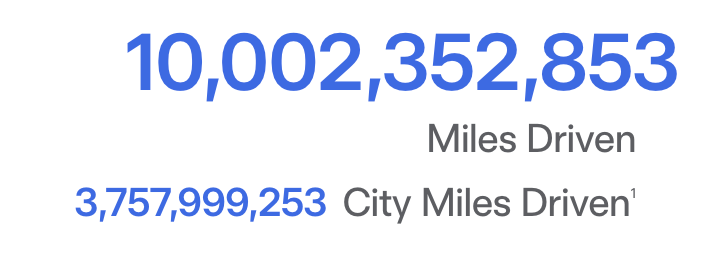
Note: As of the milestone announcement, Tesla had not yet declared the system ready for Level 4 autonomy. The round number is a data point, not a trigger. The company continues to monitor real-world performance after the 10-billionth mile.
Step 5: Validate and Iterate Toward Level 4
The final step is not a single launch but a continuous loop: deploy an updated FSD (Supervised) version to the fleet, collect more miles, retrain the neural nets, and validate safety. Once the system demonstrates reliable performance across the full diversity of roads and conditions — and regulators grant approval — Tesla may flip the switch from supervised to unsupervised.
This step includes:
- Rolling out over-the-air updates with subtle improvements.
- Analyzing disengagement reports from drivers to spot weaknesses.
- Running shadow-mode comparisons where the car ‘decides’ independently while the human remains in control.
Only after many cycles of this iterative process — and continued expansion of the fleet beyond 10 billion miles — will the true autonomous driving capability be unlocked.
Tips for Interpreting the Milestone
- Don't treat round numbers as magic. Ten billion is a convenient waypoint, but the quality and diversity of the data matter more than the total count. A billion miles of highway driving is less valuable than a million miles of tricky inner-city intersections.
- Watch the safety metrics, not just the odometer. Tesla publishes safety reports that compare FSD accident rates to the national average. That ratio is the real indicator of progress.
- Understand the difference between supervised and unsupervised. Currently, FSD (Supervised) requires an attentive driver ready to take over at any moment. Unsupervised (Level 4) would allow the car to handle entire trips without human intervention. Until regulators sign off, the 10-billion-mile milestone is just a data point — not a certification.
- Expect incremental steps rather than an overnight revolution. Each software update brings new capabilities, but removing the steering wheel requires years of validation and regulatory approval.
Remember: Data is the fuel, but engineering and testing are the engine. Tesla's 10 billion miles is an impressive achievement, but the road to true autonomy is paved with disciplined steps like the ones outlined above.