Introduction
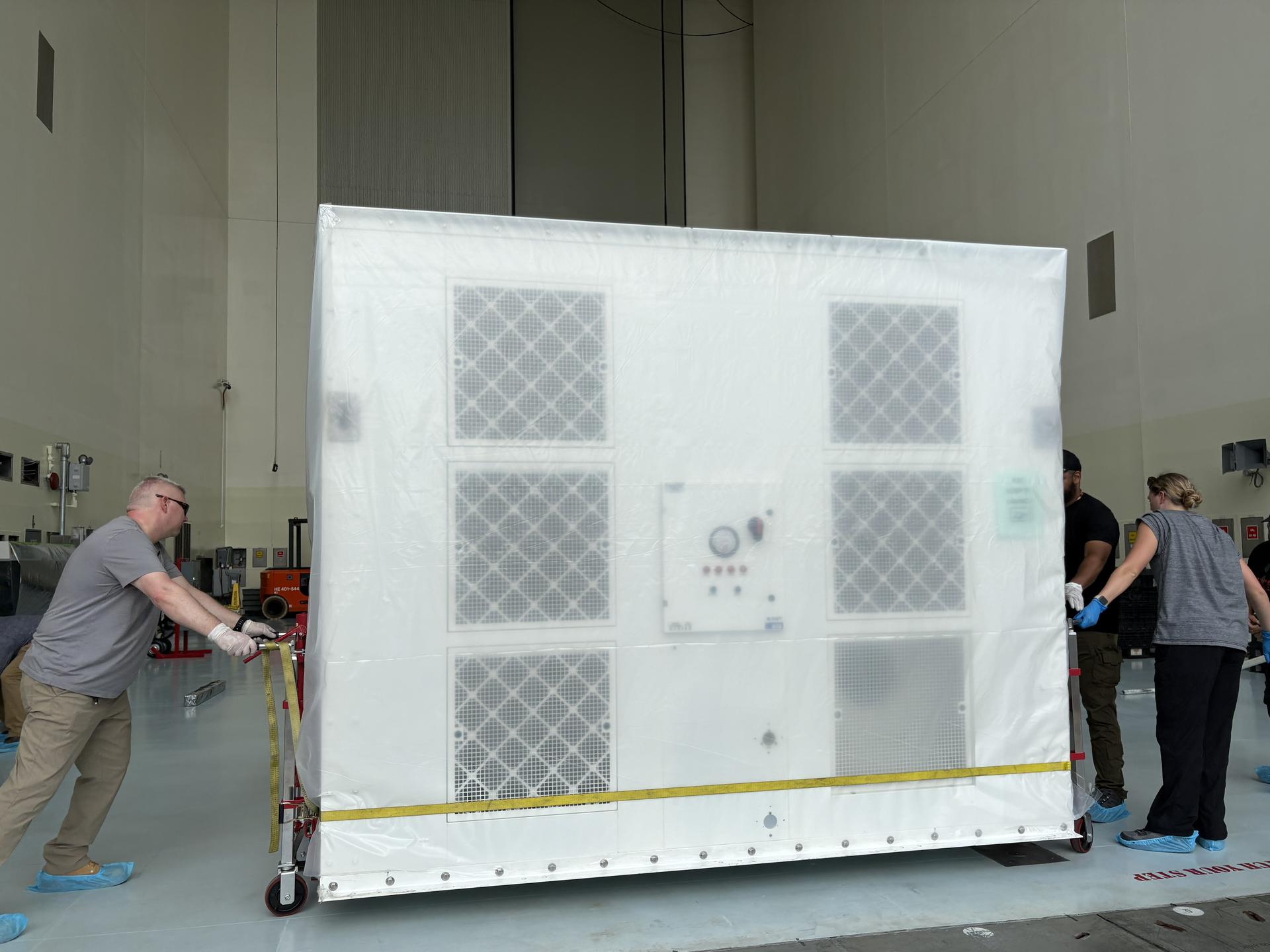
Preparing a space telescope for launch is a meticulous process. For NASA’s Nancy Grace Roman Space Telescope, one critical step involves installing specialized clean room equipment at the agency’s Kennedy Space Center in Florida. In April, technicians at the Payload Hazardous Servicing Facility (PHSF) offloaded eight heavy-duty HEPA wall modules and other ground support gear. This guide walks you through that operation, explaining how each piece of equipment ensures the telescope remains pristine until liftoff—targeted for early September aboard a SpaceX Falcon Heavy rocket from Launch Complex 39A.
What You Need
- Eight HEPA wall modules – Each weighing 1,800 pounds, these filter units upgrade the clean room’s air systems.
- Additional ground support equipment – Tools and fixtures to install and secure the modules.
- Payload Hazardous Servicing Facility (PHSF) – The controlled environment where the telescope will be fueled and processed.
- Trained technicians – Personnel certified in handling sensitive aerospace hardware.
- Transport and lifting equipment – Cranes, dollies, and protective covers for moving modules.
- Clean room validation instruments – Particle counters and airflow monitors to verify cleanliness levels after installation.
- Nancy Grace Roman Space Telescope (when ready) – The observatory with its Wide Field Instrument and Coronagraph Instrument.
Step-by-Step Guide
Step 1: Prepare the Payload Hazardous Servicing Facility
Before any equipment arrives, the PHSF must be cleared and readied. Technicians ensure the facility meets class-level cleanliness standards and that all existing systems—power, HVAC, and monitoring—are functioning. This step also includes a pre-inspection of the floor space and lifting points where the HEPA modules will be placed.
Step 2: Transport HEPA Wall Modules to the Facility
On April 27, the eight modules—each a 1,800-pound unit of high-efficiency particulate air filtration—are delivered to the PHSF loading dock. They arrive on flatbed trucks, shrouded in protective wrapping to prevent contamination during transit. The modules are carefully offloaded using a crane, with technicians guiding the operation to avoid any jarring or damage.
Step 3: Offload and Inspect Modules
Once inside the facility, each module is lifted from the truck and set onto clean dollies. Immediately after, a visual and functional inspection is performed. Technicians check for dents, scratches, or any sign of compromised seals. Particle counters sample the air near the packaging to confirm no contaminants were introduced during transport.
Step 4: Install Modules into Clean Room Walls
The HEPA wall modules are now moved to the clean room perimeter. They are designed to replace or augment existing wall panels. Each module is bolted into place using pre-drilled mounting brackets. Technicians ensure a tight seal between the module and the wall frame to prevent unfiltered air from bypassing the filter. The installation follows a precise order to maintain positive pressure inside the clean room.
Step 5: Connect Electrical and Monitoring Systems
After mechanical installation, electricians connect each module to the facility’s power supply and to the central building management system. This allows real-time monitoring of airflow, pressure differential, and filter status. Technicians calibrate the modules to deliver the required air changes per hour—typically several hundred for a class 10,000 clean room.
Step 6: Validate Clean Room Performance
With all eight modules operational, the clean room is put through a full certification test. Particle counts are taken at multiple locations, and airflow patterns are verified using smoke generators. The facility must meet the telescope’s stringent cleanliness requirements—especially important because the Roman Space Telescope’s infrared instruments are extremely sensitive to dust. Once validated, the PHSF is cleared to receive the observatory.
Step 7: Begin Telescope Processing
Now that the clean room is upgraded, the next phase can start. The Roman Space Telescope will be moved into the PHSF for key tasks such as spacecraft fueling, final instrument checks, and integration with the launch vehicle adapter. The clean room environment protects the telescope’s mirrors and detectors during these operations. The observatory will later be transported to Launch Complex 39A for integration with the SpaceX Falcon Heavy rocket.
Step 8: Support Launch Operations
Even after the telescope leaves the PHSF, the HEPA modules continue to serve as ground support equipment. They maintain the clean room for other sensitive payloads and support launch processing activities. The data logged during the telescope’s stay helps engineers plan future missions that require similar ultra-clean conditions.
Tips for Success
- Plan for weight and balance – When moving 1,800-pound modules, ensure the lifting equipment has adequate capacity and that the clean room floor can support the concentrated load.
- Use double-layer packaging – For transportation, wrap each module in anti-static film plus a breathable outer cover to prevent moisture buildup while blocking contaminants.
- Schedule validation before telescope arrival – Complete the clean room certification at least a week before the observatory enters the facility to allow time for any corrective actions.
- Document everything – Keep a log of filter serial numbers, installation torque values, and test results. This traceability is crucial for mission assurance.
- Train technicians on contamination control – Even with HEPA filters, human activity remains a major source of particles. Personnel should wear full clean room suits and follow strict protocols.
- Coordinate with launch vehicle preparations – The Roman Space Telescope’s launch timeline requires tight integration between PHSF processing and SpaceX Falcon Heavy readiness at Launch Complex 39A.
By following these steps, NASA ensures that the Nancy Grace Roman Space Telescope remains pristine as it prepares to explore the universe in infrared light. Its Wide Field Instrument will produce panoramic images, helping astronomers investigate dark energy, dark matter, and exoplanet systems. The clean room equipment installed at Kennedy Space Center is a small but critical part of making those discoveries possible.