Introduction
It’s hard to believe that many enthusiasts have held onto the same PC case for nearly a decade. For one seasoned builder, the case purchased in 2011 remained in service until 2019, with the last major upgrade occurring in 2015. This extended gap isn’t just a personal anecdote—it reflects a broader trend in the PC market. As core components have become more efficient and performance gains have slowed in certain areas, the excitement of upgrading has shifted from raw speed to form factor innovation. The PC isn’t dead; it’s evolving, and the most compelling evolution in recent years is downsizing.
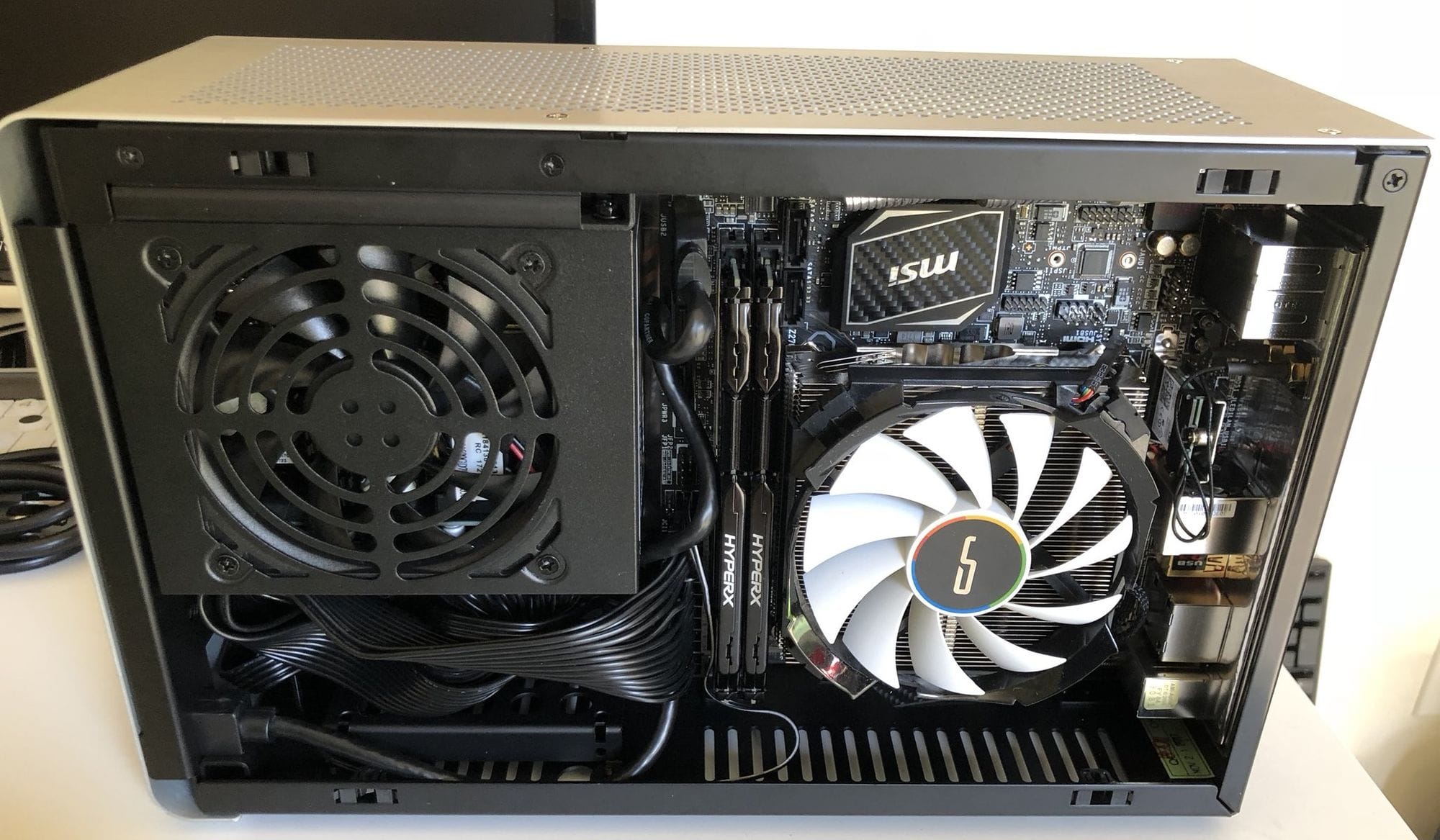
The Shift to Smaller Builds
The future of personal computing may no longer be about cramming in extra megahertz, but about delivering maximum power in the smallest possible footprint. Mini-ITX systems, once considered niche, have become a battleground for innovative case designs that prioritize volume efficiency without sacrificing high-end hardware. Two standout cases epitomize this movement: the Dan A4 SFX and the Streacom DA2. Both are engineered to fit a standard mini-ITX motherboard, SFX power supply, full-sized GPU, and a reasonably sized CPU cooler—while keeping the overall volume surprisingly low.
Case Comparison: Size vs. Flexibility
To appreciate the engineering involved, let’s examine the dimensions of several popular compact cases:
- Dan A4 SFX – 200mm × 115mm × 317mm = 7.3 liters
- Silverstone RVZ02 / ML08 – 380mm × 87mm × 370mm = 12.2 liters
- nCase M1 – 240mm × 160mm × 328mm = 12.6 liters
- Streacom DA2 – 180mm × 286mm × 340mm = 17.5 liters
For context, a PlayStation 4 Pro occupies 5.3 liters, and an Xbox One S sits at 4.3 liters. Achieving about 50% more volume than a console while delivering more than double the gaming performance is an impressive trade-off. Among these options, the Dan A4 SFX is arguably the smallest possible standard mini-ITX build without resorting to custom parts. However, with extreme CPUs and GPUs, that minimal volume can become a thermal challenge.
Choosing the Streacom DA2
After hands‑on experimentation with the Dan A4 SFX, it became clear that truly powerful components—like an Intel Core i9-9900KS with a full-sized RTX 2080 Ti—need a bit more breathing room. That’s why the Streacom DA2 was selected for this personal build. Its 17.5‑liter chassis provides extra space for cooling and cable management, striking a balance between compactness and thermal headroom.
Build Specifications
The components chosen for this downsizing project are anything but small in performance:
- CPU: Intel Core i9-9900KS (8 cores, 16 threads, 5.0 GHz boost)
- Storage: Samsung 970 PRO 1TB (NVMe) + Samsung 970 EVO 2TB (NVMe) + Samsung 860 QVO 4TB (SATA)
- Memory: 64GB DDR4-3000
- CPU Cooler: Cryorig H7 – an exact fit for the DA2
- GPU: NVIDIA GeForce RTX 2080 Ti
Compared to the previous system (a slightly overclocked i7-7700K from 2015–2017), this upgrade delivers twice the cores and faster IPC, double the RAM, and double the M.2 slots. It’s a significant leap forward, all packed into a case that barely takes up desk space.
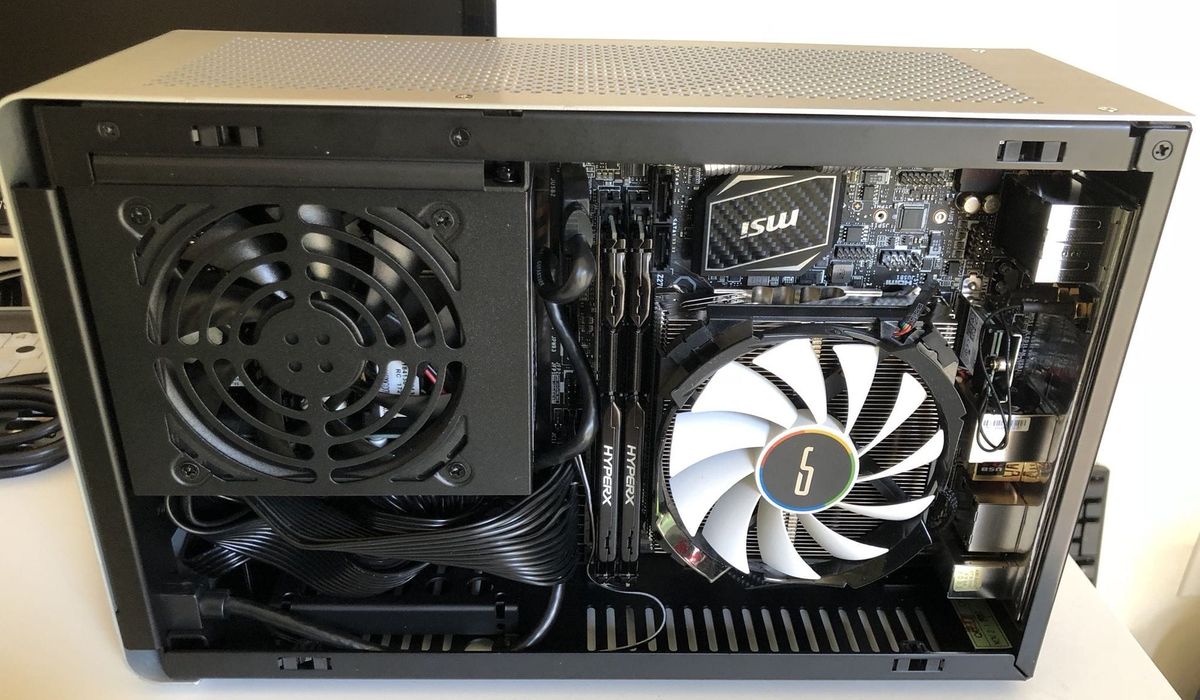
Building and Cooling Insights
The Streacom DA2 features a clever hybrid open-air design, with ventilation on the top and bottom. The interior utilizes a versatile system of horizontal and vertical brackets that can be reconfigured to accommodate different cooling setups and storage layouts. One key tip: remove the top and bottom acrylic panels with the mesh dust nets. Doing so dramatically improves airflow and lowers temperatures. In fact, after popping those acrylic pieces out, thermal performance improved significantly.
The build process itself is straightforward, though cable management is tight due to the compact nature. The captured nut and bolt design makes mounting brackets easy to reposition without losing hardware. For builders considering a similar downsizing, patience with cable routing pays off in better airflow and easier future maintenance.
Conclusion
Downsizing a PC doesn’t mean compromising on power. With cases like the Dan A4 SFX and Streacom DA2, enthusiasts can build systems that rival full‑tower rigs in performance while occupying a fraction of the desk space. The choice ultimately comes down to thermal requirements: if you’re building with flagship components, the extra volume of the DA2 provides peace of mind. For those who want the absolute smallest footprint with moderate hardware, the A4 SFX remains a marvel of engineering.
Whether you’re upgrading after years of stagnation or building your first compact system, the world of small‑form‑factor PCs offers a rewarding challenge and a satisfying result—a powerful computer that fits almost anywhere.