Introduction
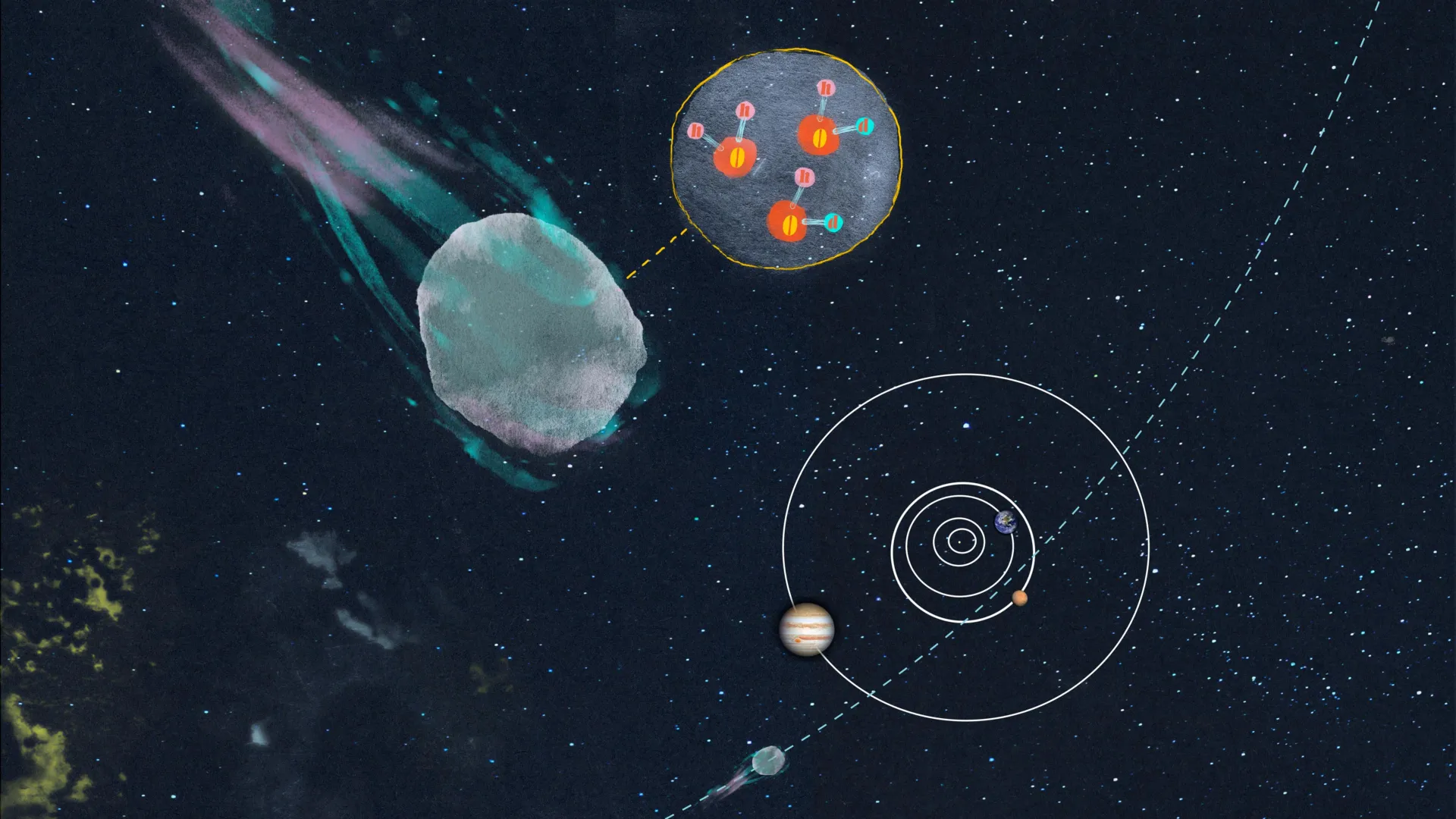
Interstellar comet 3I/ATLAS has captivated astronomers with its extraordinary composition—specifically, an astonishingly high amount of heavy water (HDO) that far surpasses any found in our solar system. This suggests the comet originated in an environment far colder and stranger than anything around our Sun. This guide walks you through the step-by-step process scientists used to detect and analyze this alien water, from initial discovery to the implications for planetary science.
What You Need
Before diving into the steps, ensure you have the following:
- Access to observational data from telescopes like the ATLAS survey or major observatories (e.g., Keck, VLT).
- Spectroscopic instruments capable of resolving water and heavy water absorption lines in the near-infrared.
- Computational models for orbital analysis (e.g., JPL Horizons) and for simulating cometary atmospheres.
- Reference spectra of H2O and HDO from laboratory measurements or solar system comets.
- Knowledge of spectroscopy and celestial mechanics, or a team of experts to interpret results.
Step-by-Step Process
Step 1: Detect the Interstellar Visitor
The first step is spotting a potential interstellar object. In this case, the ATLAS (Asteroid Terrestrial-impact Last Alert System) survey detected a faint, fast-moving point of light. With automated sky surveys running nightly, this comet was flagged for its unusual motion. Astronomers then issued alerts to the community, prompting follow-up observations. Key here is confirming its orbit.
Step 2: Determine Its Orbit
Using multiple telescope positions over days and weeks, researchers calculate the comet's trajectory. For 3I/ATLAS, the orbit turned out to be hyperbolic—meaning it came from outside the solar system and will leave it forever. This confirmation (the 'I' in its name stands for interstellar) sets it apart from native comets. Precise orbital elements require careful fitting and checking for non-gravitational forces like outgassing.
Step 3: Observe Its Spectrum
With the comet's identity confirmed, astronomers point large telescopes (e.g., Keck Observatory) at it to capture its spectrum. The light from the comet is split into its component colors using a spectrograph. This reveals absorption and emission lines from gases and dust. Special attention is given to the near-infrared region (2-5 micrometers) where water and its isotopes have strong signatures. Multiple observations are needed to account for changing activity as the comet approaches the Sun.
Step 4: Identify Water Signatures
Analyze the spectrum to find the characteristic absorption lines of ordinary water (H2O) and heavy water (HDO). For 3I/ATLAS, the heavy water lines were surprisingly prominent. Compare the observed wavelengths with laboratory data to confirm identification. This step requires careful removal of background noise and correcting for the comet's motion using orbital data.
Step 5: Measure the Heavy Water Ratio
The critical measurement is the D/H ratio—the abundance of deuterium relative to hydrogen. In water, this is the ratio of HDO to H2O. Using the strengths of the spectral lines, scientists calculate this value. For this interstellar comet, the ratio was about 30 times higher than the typical value in solar system comets. This indicates an extremely deuterium-rich environment during formation. Double-check with independent observations to ensure accuracy.
Step 6: Contrast with Solar System Comets
Compare the measured D/H ratio to known values from comets like 67P/Churyumov-Gerasimenko (visited by Rosetta) or Hale-Bopp. While some local comets show slightly elevated levels, none come close to 3I/ATLAS. This contrast underlines the uniqueness of this interstellar visitor and hints at radically different conditions beyond our solar system. The step also involves reviewing published data and correcting for any systematic differences between measurement methods.
Step 7: Interpret the Implications
Finally, draw conclusions about the comet's origin. A high heavy water abundance points to a formation environment that was extremely cold—likely below -250°C—where deuterium fractionation is enhanced. The comet must have originated in a molecular cloud or protoplanetary disk that experienced little mixing with warmer deuterium-poor material. This suggests that interstellar objects can preserve pristine chemical signatures from distant regions, offering a window into planetary building blocks elsewhere in the galaxy. Future studies may link 3I/ATLAS to specific stellar nurseries using its trajectory and composition.
Tips for Success
- Act quickly: Interstellar comets are faint and fleeting; begin follow-up observations within days of discovery.
- Use multiple telescopes: Combine data from different instruments to validate spectral features and avoid instrument biases.
- Collaborate widely: This work requires expertise in orbital dynamics, spectroscopy, and comet physics. Assemble a diverse team.
- Share data openly: Rapid public release of spectra and light curves can accelerate scientific understanding.
- Consider non-gravitational effects: Outgassing can alter the orbit; include these in models for precise D/H measurements.
- Stay updated: New interstellar objects are being found more frequently; refine your techniques with each new visitor.
By following these steps, you can appreciate the painstaking work behind the headline-grabbing discovery that comet 3I/ATLAS contains strange water never seen in our solar system—and how that water reveals a cold, alien birthplace far from the Sun.