Introduction
WebAssembly has long relied on static optimization due to its strongly typed nature, but the introduction of WasmGC brings high-level constructs that benefit from speculative techniques. This guide walks through how V8 implements speculative call_indirect inlining and deoptimization to accelerate WebAssembly execution, especially for WasmGC programs. By combining runtime feedback with just-in-time compilation, we achieve significant speedups—over 50% on Dart microbenchmarks and 1–8% on larger applications. Follow these steps to understand and implement these optimizations in your own engine or to appreciate the mechanics behind Chrome M137.
What You Need
- Familiarity with WebAssembly specification (especially indirect calls and WasmGC)
- Understanding of JIT compiler architecture (e.g., V8’s Turbofan)
- Knowledge of deoptimization techniques in dynamic languages (e.g., JavaScript)
- Basic concepts of runtime profiling and feedback collection
- Access to V8 source code (optional, for deeper exploration)
Step-by-Step Guide
Step 1: Recognize the Limitations of Static Optimization for WasmGC
Traditional WebAssembly (Wasm 1.0) benefits from ahead-of-time compilation because functions, types, and operations are fully static. WasmGC introduces dynamic features like structs, arrays, and subtyping, making runtime behavior harder to predict. To generate efficient machine code, you must move beyond purely static analysis and incorporate runtime feedback. This step involves analyzing your target workloads (e.g., Dart, Kotlin, or Java compiled to WasmGC) to identify hotspots where speculative optimization can help.
Step 2: Collect Runtime Feedback for Indirect Calls
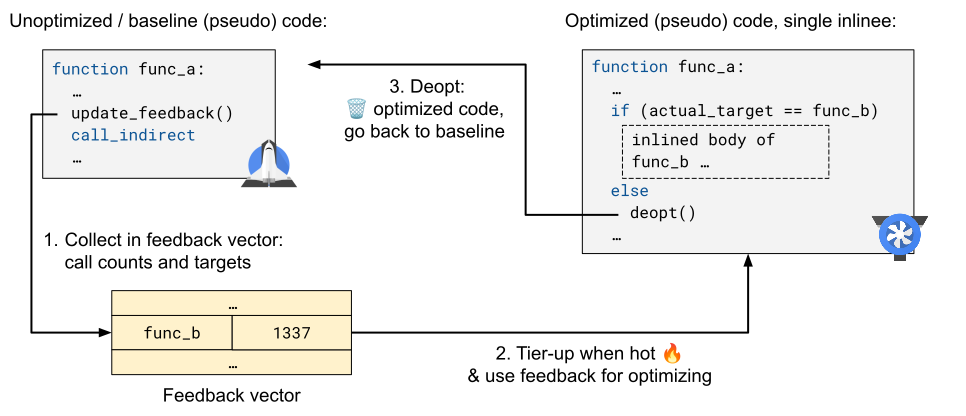
Speculative optimizations rely on profiling data. Implement a mechanism to track the target functions of call_indirect instructions. During execution, record the most frequently invoked targets and their types. V8 stores this feedback in a dedicated data structure, similar to its inline caches for JavaScript. Ensure the feedback is lightweight to avoid overhead. Collect enough samples to build confidence before triggering optimization.
Step 3: Speculatively Inline the Most Common Targets
Based on the collected feedback, generate machine code that inlines the likely target(s) of an indirect call. For example, if 90% of calls target function foo, emit code that directly calls foo inline, bypassing the indirect dispatch. This eliminates the overhead of table lookups and enables further optimizations (e.g., constant propagation, dead code elimination). The assumption is that future behavior will match the past. Mark the inlined code as speculative.
Step 4: Implement Deoptimization to Handle Assumption Failures
If a speculative assumption proves wrong (e.g., a different function is called), the engine must recover gracefully. Implement a deoptimization (deopt) mechanism that: saves the execution state (stack, registers, locals) before the speculative code; on a mismatch, transfers control to a non-specialized version of the function; and re-collects feedback for future re-optimization. This is similar to JavaScript deopts in V8 but adapted for WebAssembly’s structured control flow. Ensure the deopt path is fast and does not crash.
Step 5: Combine Inlining with Deoptimization for Synergy
The true power comes from using both techniques together. Speculative inlining without deoptimization would crash on mismatch; deoptimization without inlining loses performance gains. In V8, the combination allows aggressive speculation: inline the hottest target, and if that fails, deopt to the generic indirect call. After deopt, the engine can use the new feedback to retry optimization. This cycle yields substantial speedups, especially in polymorphic scenarios common in WasmGC programs.
Step 6: Measure and Tune Performance
Evaluate the optimizations using representative benchmarks. For Dart-based WasmGC programs, expect speedups of over 50% on microbenchmarks and 1–8% on larger applications. Use V8’s built-in profiling tools and deopt statistics to identify cases where assumptions are too aggressive or feedback insufficient. Adjust heuristics (e.g., inlining thresholds, deopt counters) to balance risk and reward. Consider disabling the optimizations for non-GC Wasm modules where they offer no benefit.
Tips for Success
- Start with WasmGC only: Speculative optimizations add complexity; focus on WasmGC first, where the payoff is highest.
- Keep deopt paths lean: Ensure state saving and restoration is efficient to minimize performance cliffs.
- Use tiered compilation: Combine speculative code with a baseline interpreter or low-optimization tier to ensure correctness when deopts occur.
- Profile before optimizing: Collect sufficient runtime feedback (e.g., at least 1000 calls) to avoid premature speculation.
- Extend to other constructs: Consider applying the same pattern to type checks, array bounds, or other dynamic operations in WasmGC.
- Test with real applications: Microbenchmarks show big gains, but verify with full applications to avoid regressions.
By following these steps, you can unlock the same performance improvements that V8 delivers in Chrome M137. Deoptimization and speculative inlining are building blocks for even more advanced optimizations in the future.